Between Mountain and Sea 山海之間
Shui Hau Nature Conservation Management Agreement · 水口自然保育管理計劃
About the Project 計劃簡介
Restoring wetland ecology, passing on village culture 復育濕地生態,傳承鄉村文化
“Between Mountain and Sea – Shui Hau Nature Conservation Management Agreement” was launched in December 2021 and has been funded by the Lantau Conservation Fund for four years. It is the first wetland conservation project on Lantau Island driven by scientific principles and nature-based solutions.
「山海之間——水口自然保育管理計劃」於2021年12月正式啟動,獲大嶼山保育基金資助至今已四年,此項目是大嶼山首個以科學原則及「自然為本方案」推動的濕地保育方案。
The project aims to protect, restore and manage the Shui Hau wetland; to conserve its distinctive wetland landscapes; to enhance biodiversity and habitat diversity; and to pass on the local rural way of life, creating an ecological environment that can be used sustainably. The project area covers Shui Hau’s Fung Shui woods, the village, and the nearby streams and marshes.
計劃目標為保護、復修及管理水口濕地,保育其獨特的濕地地貌,提升生物與生境多樣性,同時傳承鄉村特色生活及風情,創建可永續利用的生態環境。項目涵蓋水口的風水林、村落、鄰近溪流及沼澤等範圍。
Four pillars 四大核心元素
- Community engagement 社區參與
- Research and monitoring 研究與調查
- Wetland habitat management 濕地生境管理
- Education and outreach (added later) 教育與外展(後期增設)
Long-term goals include building a biodiversity database, expanding the wetland, enriching habitat diversity to attract target bird species, especially the critically endangered Yellow-breasted Bunting, and other wildlife, and building close ties with the villagers to shape a sustainable future for Shui Hau together.
計劃的長遠目標包括建立生物多樣性資料庫、擴展濕地面積、豐富生境多樣性以吸引目標鳥種(特別是極度瀕危的黃胸鵐)及其他野生動物,並與村民建立良好關係,共創水口可持續發展的未來。
Community engagement 社區參與
The project is run together with the people of Shui Hau: villagers lend their fields, share what they know of farming and village life, and join in the work and the festivals.
計劃與水口村民攜手推行:村民借出田地,分享耕作及鄉村生活的知識,並一同參與田間工作及節慶活動。
Every Chinese New Year we write Fai Chun (New Year couplets) with the villagers, and at the same time tell them how the project has gone over the year.
每年農曆新年,我們都會與村民一同寫揮春,同時向村民匯報計劃一年來的進展。
At the Mid-Autumn Festival in 2024 we shared the water caltrops grown in the ecological pond with the villagers, and showed them the plants up close, to promote the ecological value of crops: the same pond that grows the caltrops is a home for wildlife.
2024 年中秋節,我們與村民分享生態池種植的菱角,並帶來菱角植株讓大家近距離觀察,藉此推廣農作物的生態價值:種菱角的池塘,同時是野生生物的家。
When the rice is ripe, we invite the villagers to harvest it with us: cutting the rice by hand in the paddies and threshing it together.
稻米成熟時,我們邀請村民一同收割:在稻田親手割禾,再一起脫粒。
We also visit the villagers who work with the project.
我們亦會探訪與計劃合作的村民。
Research and monitoring 研究與調查
Science guides the work at Shui Hau. We survey the wildlife, measure the water and test the soil, and use the results to decide how to manage the wetland.
水口的保育工作以科學為本:我們調查野生生物、量度水文、化驗水質及土壤,再按結果決定如何管理濕地。
Ecological surveys, 2022–2026 生態調查(2022–2026)
From January 2022 to March 2026 we ran regular baseline surveys of eight groups: birds, butterflies, dragonflies, freshwater fish, amphibians and reptiles, mammals, vascular plants and freshwater macroinvertebrates. Methods include transects, point counts, night surveys and infrared cameras. Altogether 852 species have been recorded. Species of conservation concern found in 2025–26 alone include 26 birds, such as the Critically Endangered Yellow-breasted Bunting, the Endangered Romer’s Tree Frog and Chinese Bullfrog, four fish, three reptiles and nine plants, among them the very rare water clover Marsilea quadrifolia.
2022 年 1 月至 2026 年 3 月,我們定期為八個類群進行基線調查:鳥類、蝴蝶、蜻蜓、淡水魚、兩棲及爬行動物、哺乳動物、維管植物及淡水大型無脊椎動物,方法包括樣線、定點計數、夜間調查及紅外線相機。至今共記錄 852 個物種。單在 2025–26 年度錄得的關注物種,已包括 26 種鳥類(如極度瀕危的黃胸鵐)、瀕危的盧氏小樹蛙及虎紋蛙、4 種魚類、3 種爬行動物及 9 種植物(包括非常罕見的蘋)。
Standardised monitoring: does management work? 標準化監測:管理有效嗎?
Fifteen experimental plots compare paddies, permanent and temporary ponds, vegetation clearing and untouched control plots, before and after management (a Before-After-Control-Impact design, 2022–2026). The managed paddies and ponds now support more species and more animals than unmanaged marsh: bird species increased in the paddy plots, permanent ponds gained more frogs and more frog species, and dragonfly numbers per survey rose by about 39% after management. Butterfly numbers rose by 29% in a single year.
我們設立 15 個實驗樣區,比較稻田、永久及臨時水池、清除植被及不作管理的對照樣區在管理前後的變化(「前後-對照-影響」設計,2022–2026)。結果顯示,受管理的稻田及水池比未管理的沼澤擁有更多物種及數量:稻田樣區的鳥種增加,永久水池的蛙類數量及種類上升,管理後每次調查的蜻蜓數量增加約 39%;蝴蝶數量一年內亦上升 29%。
Hydrology study with The University of Hong Kong 與香港大學合作的水文研究
With Dr May Chui’s team at the Department of Civil Engineering, The University of Hong Kong, we measured rainfall, canal and river flow, groundwater and soil moisture for twelve months (2022–23), then modelled the site’s water budget. Shui Hau is naturally wet: the groundwater is shallow and the soil 30 cm down holds 62–88% moisture all year. Rain falls mostly from April to October, and in the dry season the wetland depends on water from the canal. The managed paddies and ponds hold surface water about 2.3 times longer through the dry season.
我們與香港大學土木工程系徐婷芳博士的團隊合作,連續十二個月(2022–23)量度降雨、水道及河溪流量、地下水位及土壤濕度,並建立模型計算整個地點的水量收支。水口天然濕潤:地下水位淺,30 厘米深的土壤全年含水量達 62–88%。雨水主要在 4 至 10 月落下,旱季時濕地則依靠水道引入的水源。受管理的稻田及水池在旱季保存地表水的時間延長約 2.3 倍。
Water and soil tests with The Education University of Hong Kong 與香港教育大學合作的水質及土壤化驗
Water quality is monitored with the Department of Science and Environmental Studies, The Education University of Hong Kong: in 2025–26, 94 samples were taken from seven points over twelve months. Most points scored Good or Excellent on the Water Quality Index, the water stayed suitable for farming all year, and no pollution came from the habitat management. Soil tests of the paddies in 2025 found silty soils with good levels of nitrogen and potassium for rice.
我們與香港教育大學科學與環境學系合作監測水質:2025–26 年度在七個監測點、歷時十二個月共採集 94 個水樣。大部分監測點的水質指數屬「良好」或「優良」,水質全年適合耕作,生境管理工作亦沒有帶來污染。2025 年的稻田土壤化驗顯示,土壤屬粉砂質,氮及鉀含量充足,適合種植水稻。
Why we keep the wetland wet 為何要保持濕地濕潤
The results point the same way: water keeps Shui Hau alive. In the spring of 2025 rainfall was only 35% of normal. Wildlife fell sharply in the unmanaged control plots, while the paddies and ponds we keep wet became refuges for dragonflies, frogs and birds. Rain alone, about 1,080 mm a year, cannot keep the fields wet through the dry months or a dry year. So we manage the water all year round: we keep some ponds permanently wet, flood the paddies in rotation, keep the ditches and bunds in order, and clear invasive plants such as water hyacinth, so the wetland stays moist and full of life.
各項研究結果指向同一結論:水,是水口濕地的命脈。2025 年春季降雨量只有正常的 35%,未管理的對照樣區野生生物大幅減少,而我們保持濕潤的稻田及水池卻成為蜻蜓、蛙類及鳥類的避難所。單靠每年約 1,080 毫米的雨水,並不足以令田地在旱季或乾旱年份保持濕潤。因此我們全年管理水源:保留常年有水的水池、輪流為稻田灌水、維護水道及田壆,並清除水浮蓮等入侵植物,讓濕地保持濕潤、充滿生機。
Education and outreach 教育與外展
Since 2025 the project has opened Shui Hau to the public. In 2025–26 we ran 36 education and public sessions, which with the Harvest Festival exhibition reached over 50,300 people. Many of the activities are led by the villagers themselves: they show visitors around the village, tell its history, teach the old farming skills and share their food. Visitors learn about the wetland from the people who have lived and farmed here for generations.
自 2025 年起,計劃向公眾開放水口。2025–26 年度我們共舉辦 36 節教育及公眾活動,連同水口豐饒節展覽,接觸逾 50,300 人次。不少活動由村民親自帶領:他們帶訪客遊覽村落、講述村史、傳授傳統農耕技藝,並分享家鄉美食,讓訪客從世代在此生活和耕作的村民身上認識濕地。
Farming experience 農耕體驗
Families and school groups wade into the mud to plant rice seedlings in summer and come back to harvest in autumn, threshing by hand the traditional way. Why: with their hands in the mud, people learn where rice comes from, and see that a working paddy is also a wetland home for frogs, dragonflies and birds.
家庭及學校團體夏天落田插秧,秋天回來收割,並以傳統方法人手打禾。為何舉辦:親手觸摸泥土,參加者才明白米從何來,並看到耕作中的稻田同時是蛙類、蜻蜓及雀鳥棲息的濕地。
Paddy to table 從稻田到餐桌
Visitors walk the fields where the rice grows, then sit down to a meal of Shui Hau rice and local dishes prepared with the villagers. In workshops they turn the rice into amazake, a sweet fermented rice drink. Why: it shows that rice grown in a wetland that is good for wildlife is also good food, and that keeping the fields farmed keeps the village and the wetland alive.
訪客先走訪種植稻米的田地,再與村民一同品嚐以水口米及本地食材炮製的餐點;工作坊中亦會把稻米製成甘酒(米麴發酵的甜米飲)。為何舉辦:讓人明白對野生生物友善的濕地稻米,同樣是美味的食物;田地有人耕作,村落與濕地才能延續生機。
Birdwatching tours 觀鳥導賞團
HKBWS guides lead birdwatchers through the paddies, ponds, woods and mudflat of Shui Hau, especially in autumn when migrant birds pass through. Why: visitors see for themselves how a mosaic of wet habitats draws in different birds, and learn to watch birds without disturbing them.
由本會導賞員帶領參加者走訪水口的稻田、水池、樹林及泥灘,秋季候鳥過境時尤其精彩。為何舉辦:讓參加者親眼看到多樣的濕地生境如何吸引不同鳥種,並學習在不打擾雀鳥的情況下觀察。
Night safaris: frogs and snakes 夜間生態導賞:尋找蛙蛇
On summer nights we walk the wetland with torches to look for frogs, snakes, spiders and other animals. Why: many of the wetland’s animals only come out after dark, and frogs, which need clean, wet places to breed, show how healthy the wetland is.
夏夜我們手持電筒走進濕地,尋找蛙類、蛇類、蜘蛛及其他動物。為何舉辦:不少濕地動物只在入夜後出沒,而蛙類需要乾淨濕潤的地方繁殖,正好反映濕地的健康狀況。
Cultural tours 文化導賞
Villagers take visitors around the village: the ancestral halls, the old houses and the grain store, telling stories of farming life in Shui Hau. Why: the wetland and the village grew up together. The paddies were made and kept by generations of villagers, so passing on their culture is part of keeping the wetland.
由村民帶領訪客遊覽村落,走訪祠堂、古屋及禾寮,講述水口昔日的農耕生活。為何舉辦:濕地與村落一同成長,稻田由一代又一代村民開墾和打理,傳承鄉村文化,也是守護濕地的一部分。
Volunteer programme: Shui Hau Ecological Guardians 義工計劃:水口生態守護隊
Our volunteer group is trained step by step through the whole rice and wetland year: preparing fields, bunds and ditches, sowing, planting, controlling the water level, removing invasive plants and harvesting. Experienced volunteers go on to help lead tours and festival activities and to assist with ecological surveys. In 2025–26, 53 volunteers gave 867 hours, and university student volunteers also joined. Why: a lasting wetland needs many hands, and trained volunteers become long-term guardians of Shui Hau.
我們的義工團隊按完整的稻作及濕地管理周期循序受訓:整田、修築田壆及水道、播種、插秧、調控水位、清除入侵植物以至收割。資深義工更會協助帶領導賞及節慶活動,並參與生態調查。2025–26 年度共有 53 名義工參與,累積服務 867 小時,大學生義工亦有加入。為何舉辦:濕地要長久維持,需要眾人出力;受過訓練的義工會成為水口的長期守護者。
Corporate volunteering: removing invasive species 企業義工:清除入侵物種
Company teams spend a day in the fields clearing invasive plants such as Mikania and water hyacinth from the paddies, ditches and bunds. Why: invasive plants smother crops and native plants and choke the ditches that carry water to the wetland. Clearing them by hand keeps the water flowing and the habitats open for wildlife, and gives staff a real share in the work.
企業團隊到田間服務一天,清除稻田、水道及田壆上的薇甘菊、鳳眼藍(水浮蓮)等入侵植物。為何舉辦:入侵植物會覆蓋農作物及原生植物,並堵塞為濕地供水的水道;以人手清除,可保持水流暢通、生境開揚,讓野生生物受惠,參加者亦能親身參與保育工作。
Documentary: The Water Flows On and On (2025, 24 min) 紀錄片:水源長流(2025,24分鐘)
Cradled by mountains and facing the sea, Shui Hau gathers the water running down from Lantau Peak, which threads through the “water mouth” into the South China Sea, forming a freshwater wetland that shelters a wealth of creatures and birds. In bringing the paddy fields back, water was at once the key to success and the hardest challenge. Over three years the HKBWS team worked through one difficulty after another to “keep the water”, so that farmland wetland lost for over half a century could return.
水口背山面海,鳳凰山之水匯流而下,經「水口」流入南中國海,形成了獨特的淡水濕地,孕育著眾多生物與雀鳥。在水口復耕的過程中,「水」既是成功的關鍵,也是最大的挑戰。香港觀鳥會團隊歷經三年,克服重重困難,積極進行生境管理,「保住條水」,使消失逾半世紀的農田濕地得以重現。
Now life that depends on water finds a home here, birds feed among the ripening rice, and villagers see again the fields they remember. The water of Shui Hau flows on and on, nourishing all that grows.
如今,依賴水源的生物在此安居,雀鳥在米田中飽餐,村民們也重新見證了美好的田野回憶,共同享用大自然賜予的禮物。水口的水源細水長流,源源不絕,滋潤著萬物生長。
Genesis 萍水相逢——源起
The project began with a chance discovery, and it carries years of quiet watching and care.
「山海之間——水口自然保育管理計劃」的源起,可追溯至一次偶然的發現,也承載着長期的觀察與牽掛。
Grandma’s Rhymes of Shui Hau: past memories, present threats 婆婆山歌憶往昔 生態熱點遇挑戰
After South Lantau Road opened in the 1970s, young villagers moved to the city and the broad paddy fields were slowly abandoned. Over time woodland crept in, and the low-lying freshwater habitat that had nourished so much life began to change unnoticed. That is when the idea of “conserving Shui Hau” first took root.
自70年代嶼南道開通後,年輕村民轉往城市發展,大片農田隨之逐漸棄耕。隨著時間推移,濕地或逐漸被樹林所取代。這片滋養多樣生物的低窪淡水生境亦會悄然改變,而「保育水口」的念頭就在這時候開始萌芽。
By a happy chance, HKBWS was invited to translate the “Bird-Name Song” in the documentary Rhymes of Shui Hau from the Weitou dialect. The verses recorded the past richness of birdlife at Shui Hau, though many of the bird names are now unknown, and the playful “one bird for every month” sparked the team’s curiosity about Shui Hau’s ecological past. Talking with villagers during the translation, the team felt their love for their home and their longing for the golden paddy fields of their youth, and resolved to care for Shui Hau together with them.
機緣巧合下,香港觀鳥會受邀為《水口婆婆的山歌》紀錄片中一首「鳥名歌」進行圍頭話保育翻譯,發現歌中記錄了水口昔日的鳥類多樣性,但許多雀鳥名字已無人知曉、一月一鳥的趣味更勾起團隊對水口生態歷史的好奇。在翻譯期間與水口村民的接觸時,更深深感受到他們對家鄉的關愛,以及對稻田美景的思念。這進一步堅定了與村民攜手保育水口的信念。
Recultivation begins: the villagers’ wish, the Society’s echo 復耕緣起:村民的心願與鳥會的共鳴
Since the 1970s the fields of Shui Hau had lain fallow and turned to scrub, and the wetland was drying out. Yet many villagers still remembered the golden paddies of their childhood and hoped to see Shui Hau’s old abundance again. HKBWS saw that restoring paddy fields could give feeding grounds to many buntings, including the critically endangered Yellow-breasted Bunting. The villagers’ hopes and the Society’s aims met, and this project, funded by the Lantau Conservation Fund, began.
水口的農地自1970年代起逐漸休耕棄作,演替成灌木叢,濕地生態面臨陸地化的危機。然而,許多村民心中仍掛念著童年時那片金黃色的米田。他們希望能再次看到水口重現昔日的豐饒景象。香港觀鳥會亦發現,修復米田能為極度瀕危的黃胸鵐等多種鵐科雀鳥提供覓食地。村民的願望與鳥會的保育理念不謀而合,促成了這項由大嶼山保育基金資助的計劃。
In the spirit of “when in a village, live as the villagers do”, the team met the villagers many times to explain the project, listening closely and respecting traditional farming customs. Agreements were reached with over thirty villagers, and habitat management began on 1.5 hectares of farmland. Win-win arrangements also improved the village: repairing a manhole to give a backup water supply shared by villagers and paddies, and putting up notice boards to keep everyone informed.
項目團隊積極「入鄉隨俗」,多次與村民會面,解釋計劃內容,理解和尊重村民耕作時的傳統民化習俗,最終成功與逾30位村民達成協議,在水口1.5公頃的農地展開生境管理工作。我們亦以雙贏方案在提高生境保育成效的同時為村民改善村內環境,例如維修沙井取得後備水源供村民及農地共用,及安裝告示箱以加強溝通。
Old Photos 似水流年——舊相
Villagers shared their photos and memories of Shui Hau and its paddy fields. Thank you to Chan Chau Wing and Mink Chan.
村民與我們分享水口及昔日米田的舊照片與回憶。感謝陳就榮先生及 Mink Chan。
Timeline 拖泥帶水——開拓之路
- Dec 2021 Project launch 計劃展開
With funding support, “Between Mountain and Sea” began, working with 30 villagers to manage about 15,000 m² of farmland: restoring the ecology alongside the rural character, and safeguarding the wetland for future generations. - Dec 2021 Exploring the land, laying foundations 探索土地,奠定基石
Restoration starts with knowing the land. The first year had no recultivation: it surveyed Shui Hau’s micro-habitats, ecology, hydrology and soil to lay a foundation for management. - Jan 2022 onwards Ecological surveys: mapping biodiversity 生態調查:描繪生物多樣性藍圖
Baseline surveys and biodiversity monitoring of eight groups: vascular plants, mammals, birds, amphibians, reptiles, freshwater fish, butterflies and dragonflies, along routes through the Fung Shui woods, village, wetlands and streams. Night surveys and infrared cameras keep disturbance low, and fixed monitoring plots test management by comparing before and after. This guide is built from those surveys. - Mar 2022 Hydrology: the water’s pulse 水文研究:掌握水源命脈
Water is the lifeblood of the farmland, but the old irrigation channels had fallen into disrepair, and dry seasons are getting longer while storms and typhoons grow heavier. With experts from HKU, the team set up flow monitors along the stream, groundwater, soil moisture and salinity sensors in the wetland, and a weather station at the Village Office. The data guide how water is brought to the paddies. - Dec 2021 – Jul 2022 Land surveying: finding the field boundaries 土地測量:釐清農地邊界
After years of disuse the field boundaries had blurred. Professional surveyors marked each lot with wooden stakes and drew up land record maps. - May 2023 Opening “The First Paddy” 開闢「初號田」
After a year of baseline study, experimental farming began, the first task being to open the first rice paddy by hand. In Hong Kong’s hot, humid summer the mud was knee- to thigh-deep and every step was hard work. - Jun 2023 Villager “Ah Tin” joins as project farmer 水口村民阿田加入成為計劃農夫
In the “Grain in Ear” season, Shui Hau villager Ah Tin joined the team to plant rice and build fences, bunds and ponds, bringing local know-how and closer ties with the village. - Nov 2023 Paddy fields revived after half a century 米田重現:跨越半世紀的感動時刻
The team and villagers restored 1,200 m² of paddies: Shui Hau’s first rice harvest in nearly 50 years. The village head and villagers cut, threshed, hulled and cleaned the rice themselves. “Finally, Shui Hau has rice again!” - Feb 2024 Offering to Tai Wong Yeh and a rice tasting 大王爺祭祀及「品米會」
As tradition asks, the first grains were offered to Tai Wong Yeh, the village god, and shared with villagers at a rice tasting. Even Grandma Shui Hau, who rarely goes out, came along. - Mar 2024 More paddies 水田擴展
The restored area grew to about 6,000 m², with constant levelling, bund repairs and water management. - Mar 2025 Wildlife returns 成功復育生態
By March 2025 over 667 species of plants and animals had been recorded at Shui Hau, including 142 birds (about a quarter of Hong Kong’s total), 41 dragonflies and 124 butterflies. Compared with before the fields were opened, the number of species rose by 30%. - Apr 2025 Education for everyone 豐富多元的教育活動
The second phase began, keeping up habitat management and surveys while doing much more education, so that wetland ecology is not “for experts only”. - May 2025 Shui Hau Eco-Guardian volunteers 水口生態守護隊
Volunteers now help all year round: ploughing, raising seedlings, removing invasive plants, and helping at activities and exhibitions. - Jun 2025 onwards Smart wetland management 科技引入:智慧濕地管理
Raptor perches with smart cameras: a nature-based way to keep rats down in the fields without pesticides or poison bait. Multispectral drones check the crops, and weather, soil moisture and water level sensors report in real time. - Nov 2025 – Jan 2026 The first Shui Hau Harvest Festival 第一屆水口豐饒節
Harvest Month, the Abundance Celebration and a public exhibition at Festival Walk: see Harvest Festival.
Habitats 滴水穿石——復育
From wilderness to abundance: a mosaic of habitats 從野境到豐饒:多樣生境的逐步建立
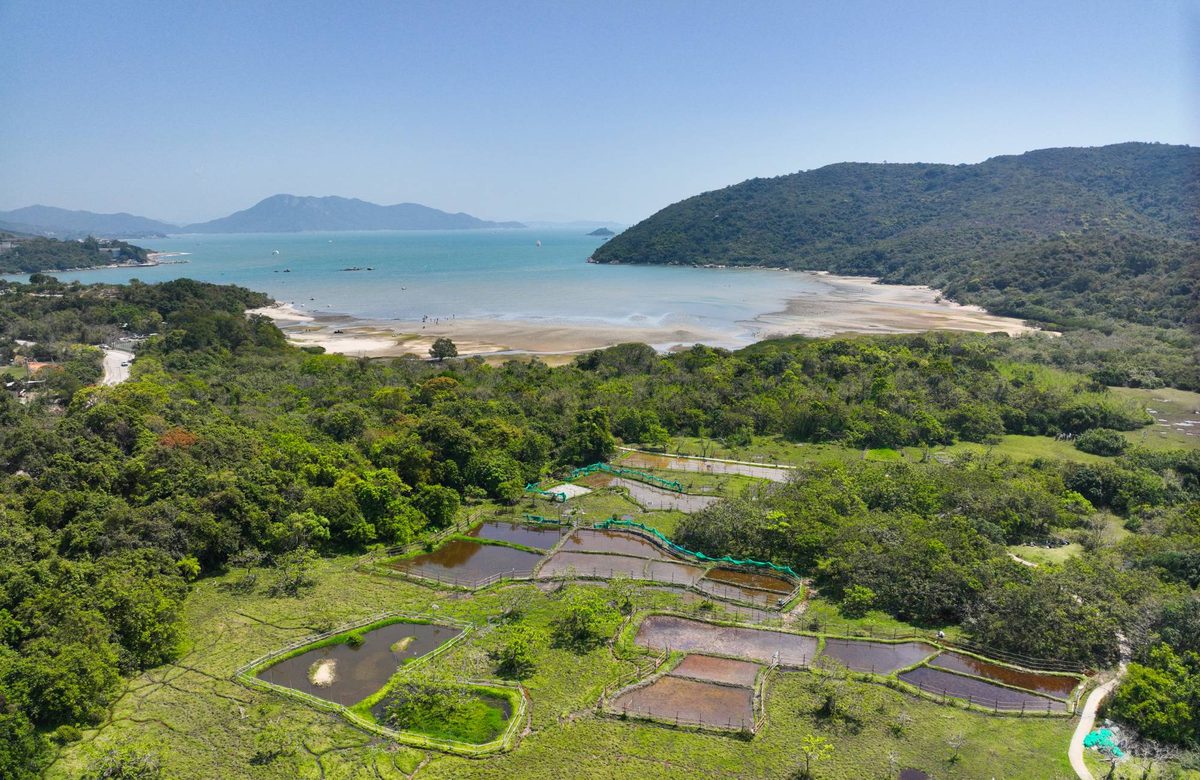
Shui Hau brings together streams, wet fields, freshwater marshes, coastal woodland and Fung Shui woods: one of the few villages on Lantau that links mountain, fields, forest, stream, mudflat and sea. Management focuses on restoring wet paddies and making eco-ponds, and on extending the water channels so the whole wetland stays wet and varied, with care for the plants, the water and invasive species.
水口集溪流、濕田、淡水沼澤、沿海林地和風水林於一身,是大嶼山少數連結山、田、林、溪、泥灘、海的自然村落。生境管理以復耕濕田和設立生態池為主,並擴展水道,讓整片濕地保持水分和多樣性。植物管理、水資源調控和外來物種控制,都有助提升生態。
Since the fields were opened, the critically endangered Yellow-breasted Bunting has come to feed many times, with Little, Black-faced, Yellow-browed and Rustic Buntings. Japanese Quail, a near threatened species, has used the paddies, and in June 2024 a Javan Pond Heron was the first record for Hong Kong and South China.
自開田以來,已多次記錄到極度瀕危的黃胸鵐(俗稱禾花雀)在此覓食。其他鵐科雀鳥,如小鵐、灰頭鵐、黃眉鵐和田鵐,也頻繁光顧。水口的稻田還曾吸引到近危物種鵪鶉前來棲息。在2024年6月,更記錄到爪哇池鷺,這是香港及華南地區的首次記錄。
Harvest Festival 豐饒水口
After years of patient work, life has returned to the paddy fields of Shui Hau, thanks to the support of the villagers and the care of the public.
水口經過數年耕耘,稻田重現生機,全賴村民的支持與公眾的關注。正是大家的參與,讓水口得以豐饒,並持續傳承這片濕地的保育故事。
Shui Hau Harvest Festival 2025–26 水口豐饒節 2025–26
To celebrate four years of habitat management, HKBWS held the first Shui Hau Harvest Festival from November 2025 to January 2026, from the Start of Winter to the Beginning of Spring, sharing the harvest with villagers and the public.
為慶祝及展示過去四年於水口的生境管理成果,香港觀鳥會於2025年11月至2026年1月(立冬至翌年立春)首次舉辦「水口豐饒節」,與村民及公眾一同慶賀豐收。
All through the year 全年活動
- Farming experiences: harvesting water caltrop, planting and cutting rice by hand, learning that every grain counts and how farming and farmland birds are linked. 農耕體驗:以傳統方法採收菱角、插秧和收割,體會「粒粒皆辛苦」,認識農耕與鳥類保育的緊密聯繫。
- Eco-guided tours of the Shui Hau wetland and how its management protects biodiversity. 生態導賞團:探索水口濕地,分享不同濕地管理方式如何保育生物多樣性。
- Workshops, such as finding solitary bees and building bee hotels. 工作坊:如「我們與蜂的距離——尋找獨居蜂」及製作獨居蜂旅館。
- Rice tastings and farm-to-table meals with villagers (Feb 2024, Nov 2025). 村民品米會及米田到餐桌(2024年2月、2025年11月)。
May the waters flow unceasingly, the seasons stay in harmony, and the land yield rich harvests for years to come.
祈願水口「水源長流、風調雨順、歲稔年豐」。
Looking Ahead 水源長流——展望
Four years of cultivation 回顧四年,成果斐然
- A species database from the baseline surveys, with management adjusted to where species live. 透過生態基線調查,建立水口物種資料庫,依物種分佈調整管理策略。
- Paddies restored to suit the place, bringing long-fallow farmland back to life. 因地制宜復修稻田,讓棄耕多年農地重現生機。
- Nature-based solutions and new technology to monitor and conserve the wetland. 採用「自然為本解決方案」及創新科技監測保育濕地。
- The critically endangered Yellow-breasted Bunting and rare species such as the Javan Pond Heron. 吸引極度瀕危黃胸鵐及爪哇池鷺等稀有物種。
- Education and volunteering that spread knowledge and train future conservationists. 開展教育活動與義工計劃,推廣保育知識、培養未來力量。
- Close ties with the villagers through farming together and sharing culture. 與村民建立深厚關係,透過共同耕作文化交流促進社區投入。
Looking ahead: a lasting ecosystem 展望未來,永續生態
The Harvest Festival marked four years of hard work and rich harvests. This harmony of nature and people comes from respect for the villagers and the land, from restoring the wetland on scientific grounds, and from farming side by side with the community.
「山海之間——水口自然保育管理計劃」以「水口豐饒節」作結,象徵著我們在這四年間辛勤耕耘、收穫豐碩。這份生態與人文共榮的成果,源於我們對當地居民及生態的尊重,以科學及保育為本修復和管理濕地,同時與村民及社區共耕同行的實踐。
As this phase ends in 2026, the team will keep looking for resources and partners, so that the work passes to the next generation and inspires more local conservation and sustainable rural life. We hope the waters of Shui Hau flow on, giving precious species a home and the community abundance: people and birds living in harmony as nature continues to thrive.
隨著2026年階段任務完成,團隊將持續努力尋找資源,凝聚各方力量,讓社區及保育工作得以薪火相傳,啟發在地保育及可持續鄉村發展的更多可能性。我們期盼水口生態能持續水源長流、生生不息,為珍貴物種提供家園,並為社區帶來豐饒,實現「人鳥和諧,自然長存」的願景。
About HKBWS 關於香港觀鳥會
- Vision: people and birds living in harmony as nature continues to thrive 願景|人鳥和諧 自然長存
- Mission: education, research, habitat management and conservation advocacy, inspiring the public to appreciate and protect wild birds and their habitats 使命|致力教育、科研、生境管理與保育倡議,啟發及鼓勵公眾一起欣賞與保護野生雀鳥及其生境
Founded in 1957 as an ornithological society, HKBWS has grown into a conservation organisation working through research, habitat management, environmental monitoring, advocacy and education. It became a charity of public character in 2002, a BirdLife International Partner in 2013, a partner of the East Asian–Australasian Flyway Partnership (EAAFP) in 2020 and a member of IUCN in 2022.
香港觀鳥會1957年成立之初,主力鳥類研究及推廣觀鳥,其後擴展至生境管理、環境監察、保育倡議及教育工作。本會於2002年被認可為公共性質慈善機構;2013年成為國際鳥盟的正式成員;2020年成為「東亞—澳大利西亞遷飛區伙伴關係」成員;2022年成為國際自然保護聯盟的成員。
Other habitat management by HKBWS 本會其他生境管理計劃
Ho Sheung Heung 河上鄉自然保育管理計劃
Since 2005, with The Conservancy Association, HKBWS has managed farmland wetland with farmers, first at Long Valley and, after the government resumed it for a nature park in 2019, at Ho Sheung Heung, creating a home for birds such as the Yellow-breasted Bunting. Funded by the ECF and then the CCFS.
本會與長春社2005年起,在塱原及河上鄉展開本港首個農業式濕地管理項目,與農夫合作提升農地生態價值,建立有利黃胸鵐等鳥類的環境。塱原2019年被政府收回發展自然生態公園後,計劃移師河上鄉。此計劃先後由環境及自然保育基金及鄉郊保育資助計劃資助。
Hong Kong Fishpond Conservation Scheme 香港魚塘生態保育計劃
Since 2012, HKBWS has worked with fishpond operators in the northwest New Territories: they drain their ponds after harvest so waterbirds can feed on the small fish and shrimps left behind. Education includes the Fishpond Festival, tours and volunteer schemes. Funded by the ECF and then the CCFS.
2012年起,本會與新界西北魚塘區漁民合作,資助漁民於收成後降低魚塘水位,讓水鳥捕食剩下的小魚小蝦。我們亦舉辦魚塘節、導賞團及義工計劃等濕地教育活動。此計劃先後由環境及自然保育基金及鄉郊保育資助計劃資助。